
Modern Adoption
When faced with an unplanned pregnancy, it may seem like the only paths are ending your pregnancy or becoming a parent when you don’t feel ready. With modern adoption plans, women and girls can be in control of their own future and can help shape a bright future for their baby. With resources like counseling, emotional and financial support, medical care – and much more – birth mothers get the help they need.
Navigating the Adoption Process
Throughout the entire adoption journey, birth mothers are empowered to shape a future that is best for both themselves and their baby. The days of “one-size-fits-all” adoptions are long gone. Today’s modern adoption plans give birth mothers the power to choose the adoptive parents and the level of involvement they want in their child’s life. There are many kinds of help, services, and support to help ensure women and girls make choices they can live with – today and in the future.
Adoption Providers
Aggieland Pregnancy Outreach-Aggieland Adoptions
-
- 410 Harvey Road, Suite, 300 College Station, TX, 77845
- (979) 764-6636
- Visit the Aggieland Pregnancy Outreach website
Children & Family Institute – Dallas
-
-
- 5787 South Hampton, Suite 360, Dallas, TX 75232
- (214) 337-9979
- Visit the Children & Family Institute website
-
Other Locations:
-
-
- Fort Worth – (817) 920-1804
-
Catholic Charities of Dallas – Main
-
-
- 1421 Mockingbird Lane, Dallas, TX 75247
- (866) 223-7500
- Visit the Catholic Charities of Dallas website
-
Other Location
-
-
- West Dallas – (214)-526-2772
-
Children’s Connections Inc. – Lubbock
-
-
- 2514 82nd Street, Suite G, Lubbock, TX 79423
- (806) 745-7995
- Visit the Children’s Connections Inc. website
-
Other Locations:
-
-
- Dallas – (214) 226-8330
- Houston – (713) 301-9101
- Abilene – (325) 513-9707
- Amarillo – (806) 352-4733
- Austin – (512) 992-9466
- Beaumont – (409) 365-4206
- Bryan – (979) 324-3302
- Corpus Christi – (361) 813-1990
- Eagle Pass – (830) 335-0640
- Edinburg – (956) 252-6555
- El Paso – (915) 309-7551
- Ft. Worth – (817) 343-7310
- Gainesville – (940) 443-7101
- Killeen – (254) 368-4637
- Laredo – (956) 786-9094
- Lufkin – (936) 404-7279
- Midland – (432) 550-0545
- San Angelo – (325) 716-3349
- San Antonio – (210) 452-9773
- San Marcos – (512) 757-7608
- Texarkana – (903) 701-4326
- Tyler – (903) 343-5273
- Victoria – (361) 703-8736
- Waco – (254) 230-2890
- Wichita Falls – (940) 613-7303
-
ChristianWorks
-
-
- 5440 Harvest Hill Rd, Suite 140, Dallas, TX 75230
- (972) 960-9981
- Visit the ChristianWorks website
-
Other Location:
-
-
- Fort Worth – (817) 502-7789
-
Hope Cottage – Dallas
-
-
- 609 Texas Street, Dallas, TX 75204
- (214) 526-8721
- Visit the Hope Cottage website
-
Inheritance Adoptions
-
-
- 1007 11th Street, Wichita Falls, TX 76301
- (904) 322-3678
- Visit the Inheritance Adoptions website
-
Providence Place
-
-
- 6487 Whitby Road, San Antonio, TX 78240
- (210) 696-2410
- Visit the Providence Place website
-
FAQs
In order to make the best personal choices, it’s important to get the most current information. Both below and in the Adoption Process section, you’ll find the facts on how adoption truly works in the world today.
What is adoption?
Adoption is the legal process that transfers parental rights and responsibilities from one parent or set of parents to another. The process ensures that the adopted child has all the benefits of a loving, permanent family if his or her birth parents choose to make an adoption plan.
Is adoption the same as giving away my baby?
Absolutely not. Adoption gives birth mothers the power to make a plan for their child’s future, a future they can choose to be a part of. Birth mothers are not abandoning their child when they choose good and loving parents that will give the baby the security and benefits of a permanent family. Realizing that it is not the right time to parent a child is a difficult one, but choosing to give that baby a loving home – and the best chance at a bright future – is a brave and selfless decision.
I’ve been told adoption is a selfish decision that women regret for the rest of their lives. Is this true?
No! In fact, it is the complete opposite. Placing a child with an adoptive family is one of the bravest things a woman will ever do. In certain cases the best decision a birth mother can make for her child is to choose a family to provide for her baby in a way that she is not able to. She sets aside her needs and puts the best interests of the child before her own. Adoption is far from abandoning her child – it’s truly being a mother. It’s making a strong, brave, loving, selfless and responsible decision when her baby needs it most.
Just like any big, lifelong decision, adoption creates a lot of emotions, and it is normal to question thoughts and feelings throughout the process. Once a birth mother chooses a family, she creates an adoption plan that meets her needs and allows her to participate in her child’s life however she feels comfortable. Because modern adoption plans put birth mothers in control of the process, they can feel confident and avoid regrets many women have in the future from choosing other unplanned pregnancy options. The knowledge of a positive decision made out of love and in the best interest of a child helps birth mothers cope with these feelings and emotions.
How can I be sure my child’s adoptive parents will take good care of my baby?
Parents who want to adopt an infant are required to meet with an adoption agency representative, social worker, or other approved agent, and complete a number of requirements. This includes an in-depth home study, to determine whether they are qualified, ready, and willing to make the sacrifices needed to be a parent.
Prospective adoptive parents have to meet all criteria set by their home state, as well as their adoption agency, in order to adopt. If the birth mother and the adoptive parents agree to an open adoption, the birth mother will be able to receive updates, pictures, letters, and/or visits, and be a part of her child’s life as the child grows up.
Will my child know who I am?
Birth mothers are in control of this decision. They can choose how much contact, if any, they would like to have with their child and his or her adoptive parents. Choosing an open adoption plan allows birth mothers to be a part of their child’s life as he or she grows up.
I’ve heard birth mothers never see their child again. Is this true?
This decision is up to the birth mother. A birth mother will work with her adoption agency to create a post-placement plan with the adoptive family so that she receives as much information and contact with the family and child as she feels is right for her.
Will I be giving my baby to a stranger?
Birth mothers choose the parents for their baby and have the opportunity to interact with any potential adoptive parents, giving them the chance to establish a relationship before the baby is even born.
Every couple hoping to adopt a child creates a book with pictures and personal information about their family called a profile book. A birth mother narrows down her choices of potential parents by reading through their profile books and then deciding which parents interest her.
Are children who were placed for adoption mistreated or placed in foster care?
Absolutely not! There is a long list of parents waiting to adopt infants. These parents are required to complete a rigorous screening process, including an in-depth home study, to determine whether they are ready and able to become parents. These candidates must meet all the guidelines set by their home state, as well as their adoption agency, in order to adopt a child.
Many adoptive parents have tried for years to have children, but infertility or other complications have made it impossible for them. These struggles make their desire to become parents even stronger. Once they are blessed with a child, he or she is truly the light of their lives. Families with both adopted and biological children can create homes where all children are loved greatly and treated equally.
What is the difference between foster care and adoption?
The main difference between foster care and adoption lies in the permanency of the arrangement. Foster care is a temporary solution where a child is placed with caregivers while efforts are made to address and resolve issues that led to their removal from their biological home. The goal is either reunification with the birth family, or if that’s not possible, considering adoption.
Who will help me if I choose adoption for my baby?
Expectant parents should only make adoption plans after first discussing all their options, receiving a detailed explanation of what the adoption process will be like, and getting professional counseling.
Birth mothers typically use an adoption agency to help with the adoption process. It is important to find a licensed, reputable agency that fits the birth mother’s personal wants and needs.
A birth mother should never feel pressured by her adoption agency. A birth mother should feel supported in considering her options carefully, and should never feel rushed into a decision. If a birth mother ever feels uncomfortable at an agency, she should look for another agency or speak with a counselor.
What is “open” adoption?
“Openness” means the identities of the birth parent(s) are not kept from the child or adoptive family. Often this involves an agreed-upon amount of ongoing contact between birth and adoptive families. Contact in an open adoption may include the exchange of letters and photographs, phone calls, e-mails, visits – anything the birth mother and adoptive family decide will work for them. Today, the vast majority of infant adoptions in the U.S. are “open” in some way.
What is the role of an adoption agency?
Adoption agencies should provide lifelong support services and counseling to birth mothers and should offer support or referrals for other services needed during and after pregnancy. The best agencies are staffed with ethical, knowledgeable professionals with experience guiding birth mothers through important decisions affecting their baby, such as:
- Living arrangements
- Choosing a family
- Understanding the legalities and paperwork
- Delivery planning and hospital stay
- Openness agreement with adoptive family, if desired
- Post-placement support
Many adoption agencies will also provide a written contract to birth mothers considering adoption, detailing the agency’s responsibilities and promises to her both during and after the adoption process.
If I’m not sure I want to make an adoption plan, will an adoption agency still help me?
Yes, adoption agencies exist to guide expectant mothers through one of the most important decisions they will ever have to make. Many women who seek information and counseling at adoption agencies decide that adoption is not the right choice for them. In these cases, agencies can and should help connect these women with relevant resources and support within the community.
Women considering making an adoption plan have a right to receive accurate information about all of their options, receive compassionate support, and be given the time needed to make their own decisions, regardless of what they ultimately choose. A responsible adoption professional should never pressure a birth mother or deny her guidance while she is considering her options.
If I sign legal documents, can I still change my mind about the adoption?
Expectant mothers may change their mind and choose to parent their child as long as the deadline to make this choice has not passed. Most state laws require the final decision to place a child for adoption to be made after the baby is born. The state of Texas has clear guidelines that outline at what point the legal documents become final and the birth mother must move forward with the adoption plan.
What if the child’s father does not agree to the adoption?
The adoption agency or attorney must try their best to locate the expectant father and inform him of his rights. However, if the father cannot be found or identified, the adoption will proceed according to the birth mother’s plans. If the expectant father supports the adoption, he has the right to be involved in the adoption planning process to the degree that he chooses. For more information about paternity rights in Texas, click here.
Who else is involved in the process? What about my family and friends?
When facing an unplanned pregnancy, birth mothers are encouraged to involve supportive members of their family and friends as they consider their options. Ultimately, it is up to the birth mother to decide what is best for her and her child, though it is usually helpful to get advice and support from loved ones.
Is there assistance available for my pregnancy expenses?
Yes! Many adoption agencies provide financial help with medical, housing, and other living expenses, either directly or through referrals to local organizations. Many prospective adoptive parents will also provide financial support to birth mothers who decide to make an adoption plan. The resources available vary from state to state. The state of Texas allows medical, legal, counseling, and living expenses to be paid by adoptive families.
If I choose to make an adoption plan, how much contact can/will I have with my child and the adoptive family?
The level of contact between a child and the adoptive family will depend on what the birth mother is comfortable with, and she can choose to make an open, semi-open, or closed adoption plan. Adoption agencies will help birth mothers identify adoptive parents who are willing to agree to her terms.
The birth mother may agree to a certain number of letters, calls, or visits per month or year. It’s important to remember that an openness agreement is based on trust and is not legally enforceable. This means that adoptive parents can legally change their mind about the amount of contact a birth mother has with her child in the future. Open adoption plans are based on the relationship and trust that exists between the birth mother and the family she chooses for her child. The agency or attorney that is facilitating the adoption will be able to answer any questions a birth mother may have about this. We recommend both birth mothers and adoptive parents fully understand this issue before finalizing the adoption, and communicate with their caseworker to help manage expectations if issues arise.
What kind of information will the agency provide about the prospective adoptive parents?
Adoption agencies maintain complete, detailed files about prospective adoptive parents, including information like religion, race, hometown, and personality traits. It is best for birth mothers to make a list of the qualities and attributes they consider most important for the adoptive parents to possess so that their adoption agency can find the best-suited adoptive families. Birth mothers can also view adoptive parent profiles online or may be asked to visit the adoption agency office for more information about prospective parents.
How will my family and friends react if I tell them I am considering adoption?
It depends on each person and how much they know about how adoption works today. While many are very supportive of adoption, a birth mother should be prepared for the possibility that members of her community, family, or friends may not understand her decision to make an adoption plan. With the help of an adoption agency, she may be able to help them understand her thinking and reasons in deciding to make an adoption plan.
Never forget that the decision is the birth mother’s. It is important that making an adoption plan be a personal choice. Only the birth mother can know what is right for both herself and her baby.
How will I feel after I place my baby for adoption?
No two experiences and emotions are the same, but placing a child for adoption is never an easy decision. Even birth mothers who feel very sure of the adoption decision experience a sense of grief and loss. This feeling of loss can only be worked through and reconciled if it is recognized and if the birth mother seeks and gets the support she needs.
All birth mothers are entitled to compassionate counseling and support. Adoption may be a one-time legal event, but it has a lifelong impact for those involved, and each person experiences it differently.
Can I talk with other birth mothers?
After contacting an adoption agency, counselors should be able to connect those considering adoption with other birth parents who have been in a similar situation. They can tell expectant mothers how they felt at the time and how they feel now, explain what was most helpful to them, and provide additional support. Watching real stories from birth mothers and searching for other birth parent information, blogs, and support groups online is also recommended.
I have more questions about adoption. Whom can I talk to?
A counselor or social worker at an adoption agency can help answer questions in greater detail. To find an adoption agency, view our list of adoption providers.
Collateral
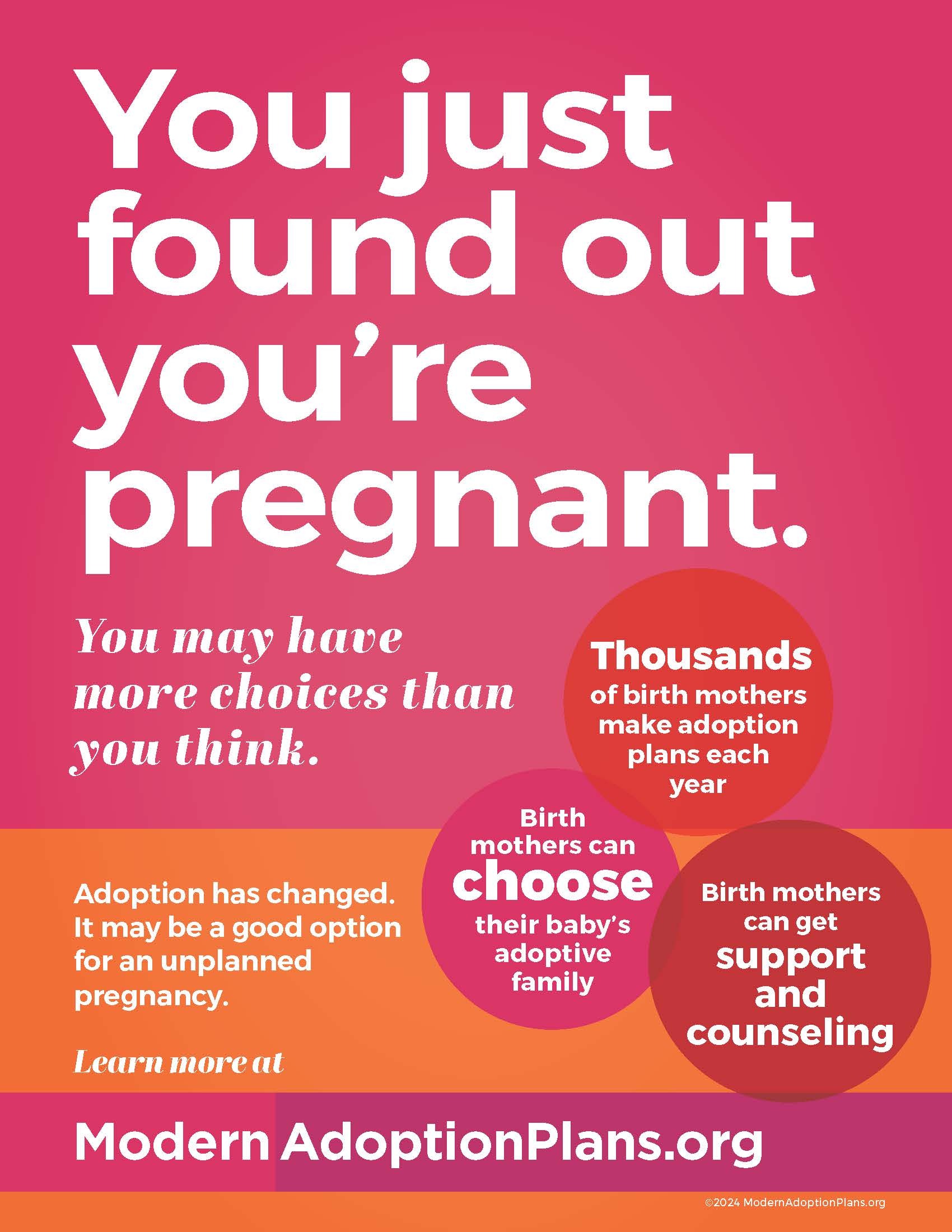
8.5×11 Overview Flyer
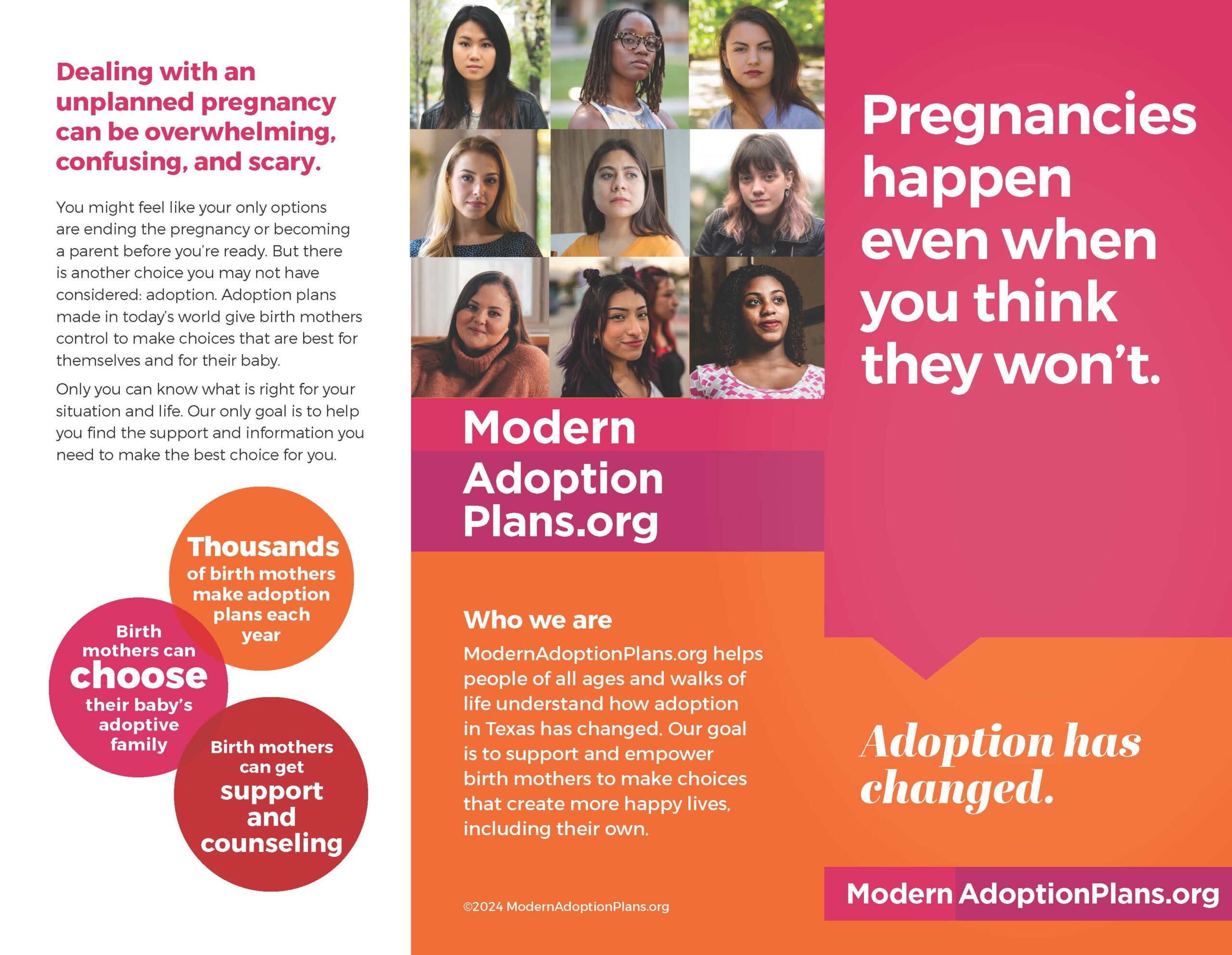
11×8.5 Tri-fold Brochure